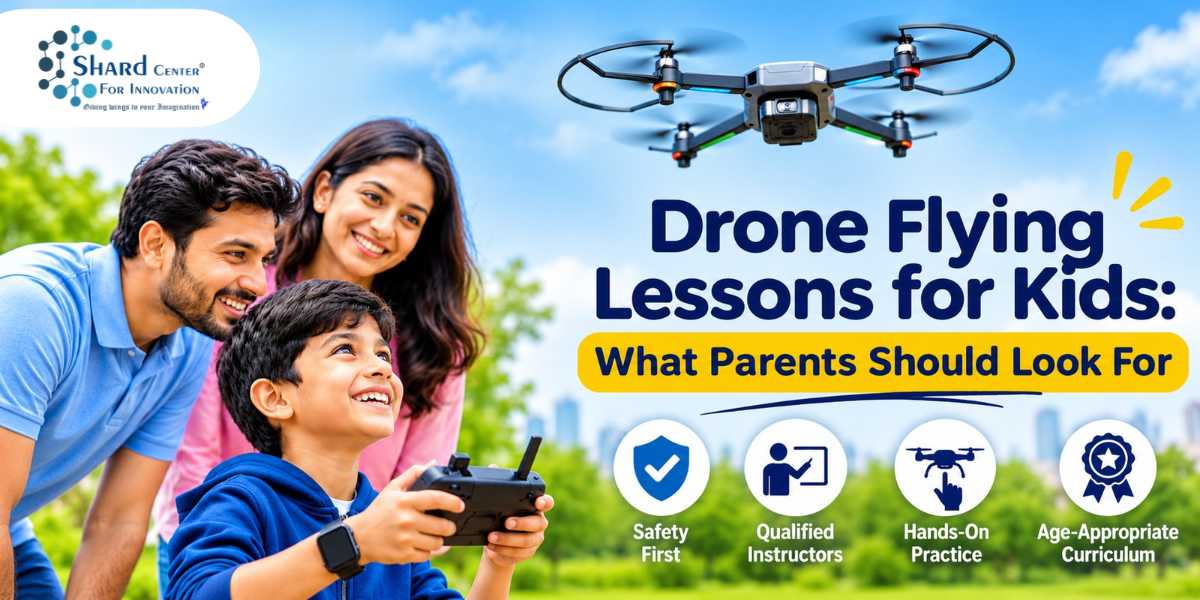
Drone flying introduces kids to several new skills and builds their coordination and spatial awareness while providing them with an understanding of basic aviation rules. However, it is important that drone flying is performed under strict adult supervision and safety arrangements.
In this guide, we provide a checklist that lists the steps that should be taken to lessen risk and protect people and property so that drone flying becomes an enjoyable activity without any drawbacks.
Why Drone Safety is Important
Drones may serve recreational purposes, but they must not be equated with toys. They are sophisticated air-crafts that are powered with spinning propellers, lithium-ion batteries, cameras and radio controls and hold the potential to cause eye injuries, cuts, privacy concerns or interference from other aircraft if they are not operated with care.
Following a routine helps adults to check whether their drone can be operated, review the environment, the battery and follow local rules.
Drone Safety Rules for Kids
The following checklist is useful to follow before a flight, particularly for beginners and when the drone is flying in a new location
- The drone should be age-appropriate for the child.
- An adult should be supervising the flight.
- Any local drone laws and park or school rules should be followed.
- Drone should not be flown near airports, helipads and emergency zones.
- Drone propellers, guards, arms and landing gear should be inspected for damage.
- The battery should be checked, as it should not be cracked or hot.
- The battery should be fully charged using the manufacturer’s charger.
- A wide, open area without people, cars and animals should be chosen.
- Select a take-off and landing zone without major obstacles.
- Let the children be many feet away from spinning propellers.
- Practice to hover at a low altitude before a forward flight.
- After flying, store the drone safety and let its batteries cool before recharging.
Selecting the Right Drone
Parents should select a drone that a child can control himself. They should select drones that are simple and lightweight, with propeller guards, one-button takeoff and landing, altitude hold, and headless mode rather than selecting camera Drone Training programme with advanced features.
Users should keep in mind the manufacturer’s recommended age range, because it reflects the drone’s speed, weight and control complexity. New pilots should fly a toy-grade drone in open areas instead of going for a fast quad-copter with GPS and a high- resolution camera. The child pilot should be able to manage the controller with both hands and follow directional inputs.
The environment should be open and far from roads, trees, power lines, buildings, crowds and water. Before flying, pilots should observe if there are any people sitting nearby, or any animals that could be disturbed. They should look for obstacles such as fences and branches, or any reflective surfaces or metal structures that may interfere with control. Check if there is any airport, heliport or restricted airspace nearby. The weather forecast should also be checked.
Drone regulations differ by country, state and municipality, but the underlying idea is that drones should avoid aircraft, respect private property and fly only where they are permitted.
Read more: Beginner’s Guide to Learning Drone Flying for Kids

Adults Should Supervise Every Flight
Young children will not be able to manage drone safety. An adult should manage the drone’s safety requirements, inspect it before flying, oversee the launch area and intervene if there are issues. This becomes especially important is the drone has features such as return-to-home, follow-me mode, or waypoint flying. These tools can give children a false sense of security—the drone pilot must still know how to stop the drone, land it safely and shut it down.
Adults and young children can practice sharing the drone flying: adults can take over the complicated take-off and landing schedules while children can practice drone movements in between. This reduces the risk of crashing the drone.
Read more: Benefits of Drone Flying Classes for School Students
Check the Drone and Controller Before Each Flight
Checking the equipment before flight can prevent many accidents. Check the propeller for chips, cracks or bends. The propeller guards should be secure, and the controller batteries should also be checked. If the drone is connected to a mobile application, check that the firmware and app updates are completed before the session.
The Lithium batteries should be checked as they can overheat, swell or fail if they are charged incorrectly. Users should use original charger, and charge on a non-flammable surface. They should not use any battery which is leaking, swollen or damaged.
Follow Child-friendly Flight Rules
Adults supervising children flying drones should follow child-friendly rules and fly drones in short sessions. They should fly low until the drone can be controlled and keep the drone before their sight. They should not fly above people, animals or cars; and should stop flying when the battery gets low.
Conclusion
Drone flying offers several learning benefits for students, such as developing practical skills and understanding flight. However, safety matters while operating a drone. Children should always be supervised by adults, and must be familiar with the rules related to drone flying and maintain a safe distance from people, animals and property. Shard Center for Innovation offers a practical and innovative Drone Training programme that trains students to fly a drone safely and responsibly, under expert supervision. Enquire today and let your child learn from drone training experts.
Frequently Asked Questions (FAQs)
Q.1. Is drone flying safe for students?
Ans: Yes, drone flying is safe for students when they are supervised by adult mentors and when all safety guidelines are followed.
Q.2. What safety precautions should students follow while flying drones?
Ans: Students should check the drone before take-off, check the health of the battery, fly away from people and obstacles, do not fly in no-fly areas such as airports and helipads, and follow the guidelines provided by the manufacturer.
Q.3. What should students check before taking off?
Ans: Students should check the propellers, battery, controller connection, surroundings, weather conditions for outdoor flights and any flying restrictions.
Q.4. What weather conditions suit outdoor drone flying?
Ans: Calm, dry weather with minimal wind is fine for beginners. Rain, thunderstorms, strong winds and poor visibility should be avoided, and the drone manufacturers operating limits should be followed.
Q.5. What skills do students develop by flying drones?
Ans: Drone flying helps develop hand-eye coordination, concentration, problem solving, spatial awareness, critical thinking and an understanding of science, technology, engineering and mathematics (STEM).
Q.6. At what age can kids start learning drone flying?
Ans: Children can start when they can understand basic instructions and safety rules.
Q.7. Do beginners need technical knowledge?
Ans: No, basic training is enough to get started.
Q.8. Which drones are best for beginners?
Ans: Lightweight drones with propeller guards and easy controls.
Q.9. Can drone flying help build a future career?
Ans: Yes, it introduces careers in robotics, agriculture, photography and engineering.
Q.10. Where can kids learn drone flying?
Ans: Kids can learn through practical drone training programmes at Shard Center for Innovation.