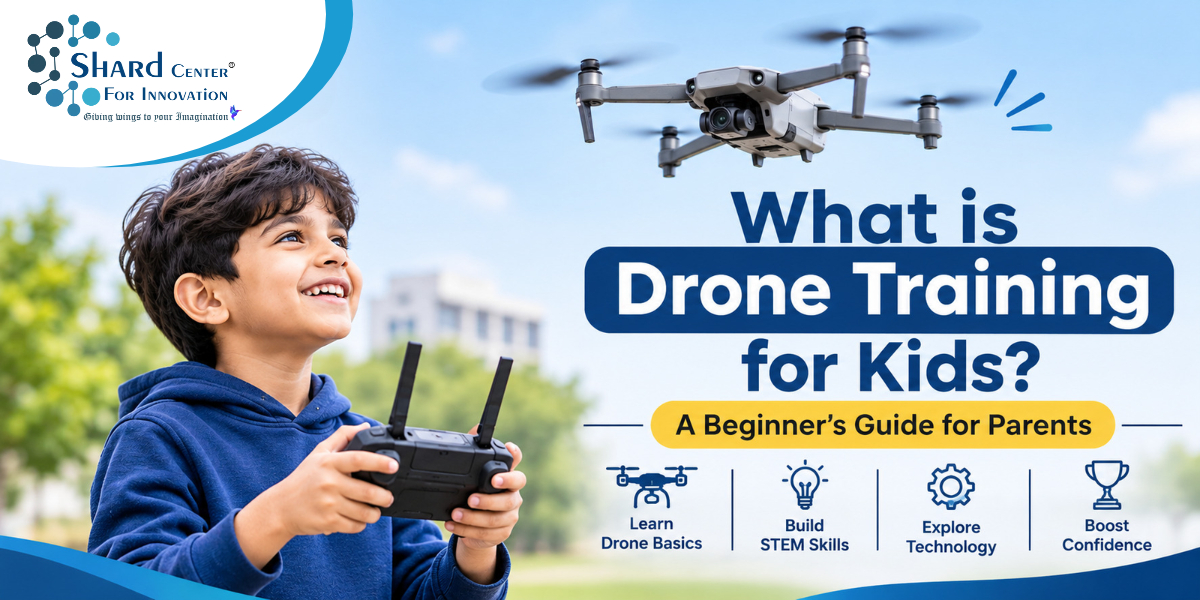
Technology is changing how users experience and interact with the world. Drone technology is among the emerging technologies that have applications in agriculture, defence, photography and several other fields. Children can also learn this technology through child-friendly programs, keeping in view their safety. Drone flying is a fun activity for students that also develops their skills in Science, Technology, Engineering and Mathematics (STEM) fields. Parents should understand the offerings of drone training before making a decision for their children.
What Is Drone Training for Kids?
Drone training for kids is a program by experienced drone pilots that teaches the child the basics of drone piloting. It teaches them how drones work, how they should be operated and how they are utilized in different industries. Students learn about the basic components of drones, flying techniques, safety guidelines and practical applications.
Children are made familiar with the technology first rather than directly flying the drone. Children learn about different drone parts such as propellers, which fly the drones; motors, which power the propellers, batteries which supply electrical energy to operate the drone; flight controllers, which maintain balance and control during flight; remote controllers, which let the pilot operate the drone and camera to capture photographs and videos during flight.
Understanding how these components work provides an understanding to children.
How Does Drone Training Work?
A beginner-friendly drone training programme includes theoretical lessons, demonstrations as well as practical flying sessions.
1. Introduction to Drone Technology
Children are introduced to drone training, understand how drones function and how they are used. Basic concepts are introduced through demonstrations, videos and interactive activities.
2. Understanding Drone Components
Students take up a drone and examine its parts to understand the role played by each component. This develops their interest in mechanical and electronic systems.
3. Learning Basic Flying Techniques
After understanding the basics, students are introduced to different drone controls, and learn commands such as take-off, landing, hovering, moving forward and backward and changing direction.
4. Practical Flying Activities
With the help of mentors, children fly drones in a controlled space. They manage simple challenges such as maintaining a steady hover or navigating an obstacle course.
5. Introduction to Advanced Concepts
Students can also explore more advanced skills such as programming, coding, aerial photography, etc.
Read more: How to Choose the Best Drone Training Course for Kids in India
What Skills Do Children Develop Through Drone Training?
Drone training provides several practical as well as academic skills to children. They provide STEM learning opportunities for children by encouraging them to learn scientific and mathematical concepts such as motion, gravity, force, angles and measurement. It also encourages the development of problem-solving skills as children learn to observe situations and identify challenges. Their creativity and innovation skills are fostered as children learn to develop innovative applications of technology, while their focus and concentration are enhanced while practicing flying with patience. Children grow their confidence and also develop skills in teamwork as they work in projects that develop communication, cooperation and leadership skills. 
Why Should Parents Consider Drone Training for Their Children?
As the world is becoming increasingly tech-driven, students should become familiar with technology from an early age. Drone training provides a practical learning opportunity in STEM, and makes the learning interactive and encouraging. Drone technology also has applications in fields such as agriculture, environmental monitoring, disaster management, construction, filmmaking, and logistics. Drone Flying Lessons for Kids: What Parents Should Look For
Following Drone Safety Rules
Safety is the first priority while flying a drone. It has to be ensured that practical lessons take place through a qualified trainer. The instructor guidelines and safety instructions should be followed, and the drone should be flown at a safe distance from people and property. It should be checked before every flight and should not be flown near airports, roads and other restricted areas. The batteries should be checked properly. The drone should be flown considering the Drone Rules 2021, and any requirements by the Directorate General of Civil Aviation (DGCA).
How to Choose the Right Drone Training Programme?
Parents should ensure that the drone training program has an age-appropriate curriculum, which considers the child’s age and learning ability. The instructors should be experienced and have the technical know-how related to drones. The course should encourage hands-on learning for children, while following the required safety standards. Understanding can be built through practical projects, taught in a balanced manner with theoretical knowledge.
Conclusion
Drone training for students introduces them to emerging technologies in STEM. By practically flying a drone, students develop their curiosity, creativity, problem-solving and technological awareness. Parents can make sure that their children develop future-oriented skills. By following the right guidance and utilizing age-appropriate equipment, children can develop their skills in drone flying. The skills developed through drone flying can benefit students in their academic and professional journey. Shard Center for Innovation has a dedicated drone training program, which teaches students in a beginner-friendly way and with all safety considerations.
Enquire today and enroll your child.
Frequently Asked Questions (FAQs)
Q1. What is drone training for kids?
Ans: Drone training includes practical basic drone flying lessons while considering the safety considerations. It includes theoretical knowledge as well as practical activities.
Q2. At what age can children start learning drone flying?
Ans: Children can begin drone training at an early age through activities and simulators. Practical flying courses have minimum age requirements depending upon the equipment used, curriculum and training provider.
Q3. Does a child need prior knowledge of coding or robotics to learn drone flying?
Ans: No prior knowledge of coding, robotics or engineering is required. Programs start with basic concepts and gradually introduce the children to drone operations and technology.
Q4. What do children learn in a beginner drone training course?
Ans: In a beginner drone program, children are introduced to drone components, flight controls, basic aerodynamics, take-off and landing techniques, hovering, navigation and safety guidelines. Some programmes also include coding, robotics and photography.
Q5. What are the benefits of drone training for children?
Ans: Drone training lets children develop problem-solving skills, hand-eye coordination, creativity, concentration, teamwork and technical understanding, It also introduces them to practical applications of STEM education.
Q6. Is drone flying safe for children?
Ans: Drone flying is a safe learning activity when children utilise age-appropriate equipment, follow safety instructions and practice under adult supervision.
Q7. What activities are included in drone training for kids?
Ans: Activities include drone assembly demonstrations, basic flying, hovering, obstacle navigation, take-off, landing, and understanding drone components.
Q8. How does drone training support STEM education?
Ans: Drone training connects science, technology, engineering, and mathematics through practical activities involving motion, force, angles, measurements, and technology.
Q9. Do kids learn drone programming during training?
Ans: Some drone training programs introduce children to basic coding and programming concepts, helping them understand automated drone operations.
Q10. What should parents check before enrolling their child in drone classes?
Ans: Parents should check the course curriculum, trainer experience, age-appropriate equipment, practical learning activities, and safety guidelines.