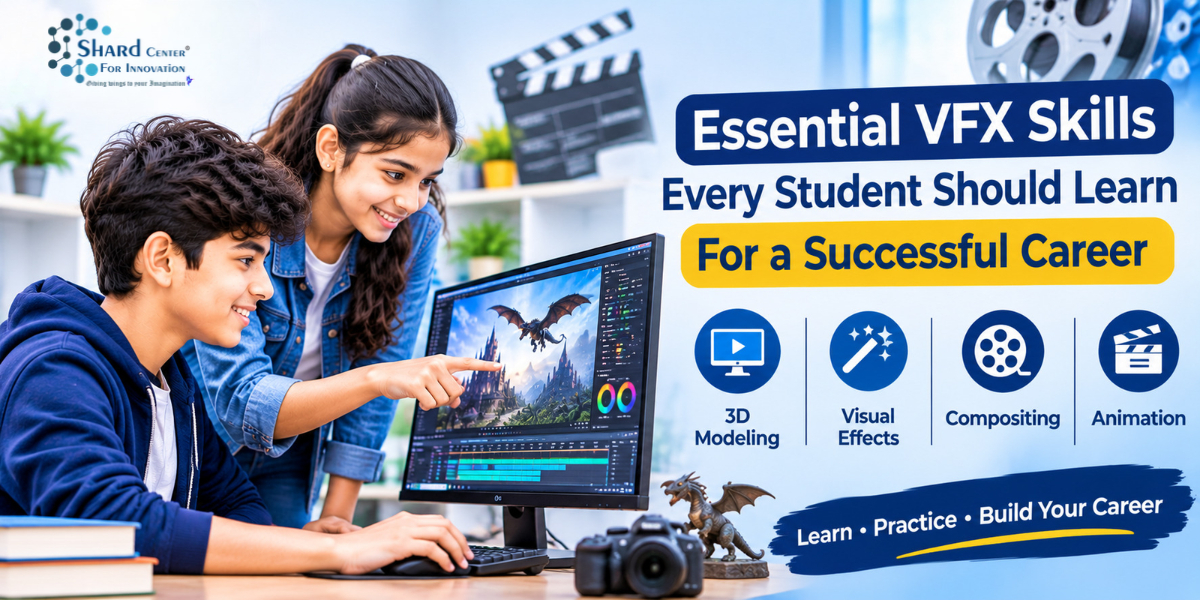
Animation and visual effects are increasingly utilised in many fields such as blockbuster films, OTT series, video games, advertisements and social media. As the visual effects industry is rapidly evolving industry, students must learn the right artistic and technical skills to succeed in this field in 2026. Animation and visual effects combine visual storytelling with creativity and the right technical tools to create stunning visual work that is often utilised in movies and digital content around the world.
Strong Understanding of Animation Principles
It is important that basic principles behind animation, such as timing, squash and stretch, anticipation and motion dynamics are familiar for the user, as these concepts form the basics of animation and let characters and objects move naturally. Without these principles, animations lose their liveliness and look unrealistic.
Mastery of Industry Software
There are many technical skills that contribute to the animation and VFX industry. Students must select the right tools that enable them to meet software objectives.
Some of these tools include Autodesk Maya, Blender, Adobe After Effects, Adobe Photoshop, Nuke and other compositing software. Mastering these tools let beginners to turn into professionals making meaningful contributions.
Visual Storytelling and Creativity
Through animations and VFX, producers always aim to convey a story or a message, making animation software as an important storytelling tool. As students build characters and environments and create emotionally engaging scenes, creativity and imagination guide the student into making emotionally engaging content.
Compositing and Visual Effects Techniques
As VFX artists create a perfect seamless final shot after combining many visual elements, several skills such as compositing, motion tracking, color correction and green screen integration assume importance in producing films and digital content.
As visual effects are increasingly utilised across several fields, these skills have assumed a lot of importance in the industry. 
Read more:- VFX Course for Professionals: Skills, Software and Career Guide
Portfolio Development
In creative field, a strong portfolio matters a lot more than academic credentials. Practical work that demonstrates expertise is viewed favourably. Students therefore should focus on building a strong portfolio with practical work to demonstrate their competence, and include animation clips, VFX shots, character designs and project work. This is very useful in getting good career opportunities.
Learning from the Right Training Environment
With the right professional training, students can build their skills according to the industry requirements. Shard Center for Innovation provides the best, industry relevant training in visual effects that enables students to gain hands-on experience under practical guidance and build a strong foundation in animation, design and digital media.
Frequently Asked Questions (FAQs)
Q1. What are the most important skills required to build a career in VFX?
Ans: Important VFX skills include 3D modelling, texturing, animation, compositing, lighting, rendering, motion graphics and visual storytelling. Along with these skills, it is essential that students develop creativity, attention to detail, problem-solving abilities and technical knowledge of VFX software.
Q2. Do students need drawing skills to learn VFX?
Ans: Drawing skills are helpful but not compulsory to learn VFX. What matters is a basic understanding of shapes, proportions, colours, perspective and composition to create better visual effects. Most of the visual skills can be bettered through practice and training.
Q3. Which software should beginners learn for VFX?
Ans: Students should work with software such as Blender, Blender, Adobe After Effects, Autodesk Maya, Nuke and Adobe Photoshop. Blender is helpful for learning 3D modelling and animation, while After Effects is useful for learning motion graphics and compositing.
Q4. Is coding necessary for a career in VFX?
Ans: Coding is not required for VFX. However, Python or scripting is helpful for students to automate repetitive tasks, create tools and better their technical workflow.
Q5. What is the difference between VFX and animation?
Ans: VFX enhances visual elements in live-action footage, such as explosions, digital environments and computer-generated characters. Animation creates movement and brings characters, objects and scenes to life. Both fields are often overlapping.
Q6. How important is creativity in VFX?
Ans: Creativity is essential in VFX because professionals depend on the tools to create visually appealing scenes, realistic environments and represent ideas in creative manner. Both technical knowledge and creativity is utilised together to create good quality of visual effects.
Q7. What is 3D modelling in VFX?
Ans: 3D modelling involves creating 3D objects, characters, environments and structures using specialised software. It is utilised in films, television, gaming, advertising and architecture.
Q8. What is compositing in visual effects?
Ans: Compositing is the process of combining multiple visual elements, such as live-action footage, CGI, backgrounds and special effects, into one final scene.
Q9. What is the role of lighting in VFX?
Ans: Lighting helps make digital objects and environments look realistic. It creates depth, shadows, atmosphere and consistency between CGI elements and live-action footage.
Q10. How can students develop practical VFX skills?
Ans: Students can develop VFX skills by practising with software, creating small animation projects, experimenting with compositing and working on real-world creative assignments.