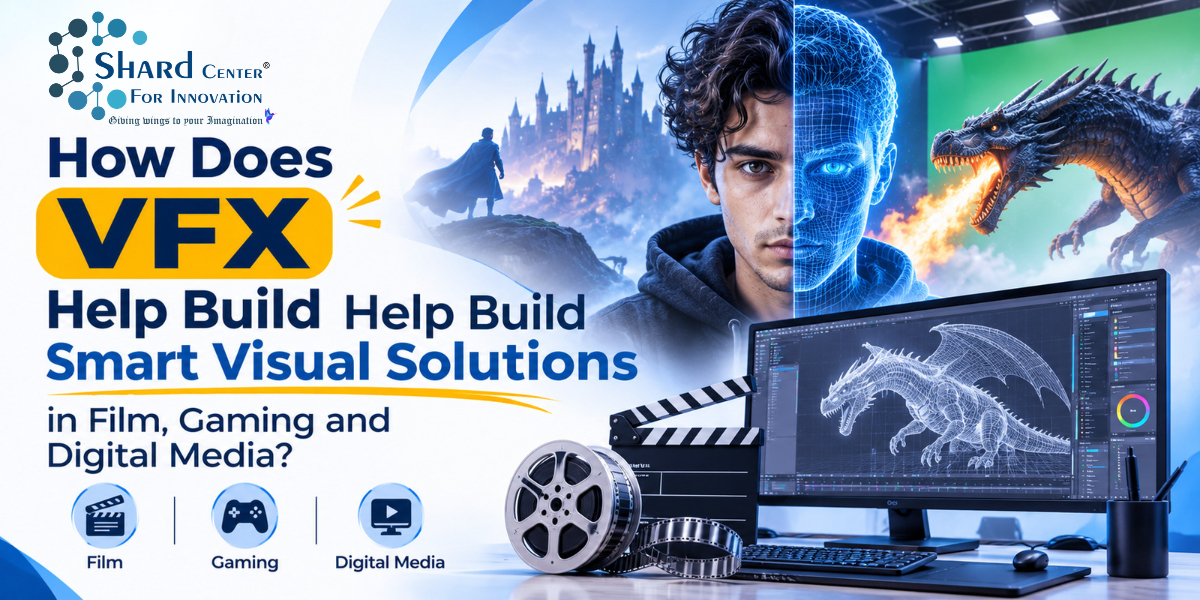
3D animation and visual effects have transformed the entertainment and creative industries. Several blockbuster films, video games as well as high impact digital advertising employ animation and VFX to engage audience through their realistic storytelling. Apart from being utilised in Hollywood studios, today they are also used by brands, companies and production houses in India.
For students who wish to learn about 3D animation and VFX courses in India, or professionals wishing to consider creative careers, it becomes important to understand how VFX and animation are utilised by these industries and how they can contribute to it.
3D Animation and VFX’s Contribution to Delivering Modern Visual Solutions
3D animation can generate digital characters, environments and objects, while the role of VFX is to enhance or alter real world footage using computer generated imagery. In tandem, they let creators visualise ideas that are difficult or expense to film.
Many modern studios depend upon advanced animation that combines modelling, texturing, lighting, rigging, animation, and post-production effects to create spectacular VFX content.
3D Animation and VFX’s Role in Filmmaking
The film industry actively employs VFX and animation artists, as every major movie utilises digital effects. VFX is used in films to create realistic CGI characters and creatures, build fantasy worlds and sci-fi environments, enhance action sequences and visual realism, simulate explosions, fire, water and destruction, recreate historical scenes and de-age actors.
3D Animation and VFX’s Contribution to the Gaming Industry
Video games increasingly utilise 3D animation to deliver immersive and interactive experiences. In the gaming field, VFX is utilised for character modelling, motion animation, environment and level design, real time lighting and physics effects, special effects for weapons, powers and abilities, cutscenes and cinematic storytelling.
Studios require artists who have been trained through a 3D Course that includes artistic creativity and technical know-how.
3D Animation and VFX’s Use in Advertising and Branding
Brands are increasingly utilising animation and VFX to deliver their message and create advertising campaigns. Some applications of VFX in advertising include animated brand mascots and characters, product visualisation and explainer videos, motion graphics for social media ads, visual effects for commercials and TV spots and interactive digital marketing content.
Motion Graphics: Combining Design & Animation
Motion graphics combine graphic design with animation to create visually engaging content. Motion graphics are widely utilised in advertising, corporate videos, OTT platforms, and digital marketing. They are best used for logo animations, promotional videos, infographics and explainer content, UI animations and brand storytelling.
Many design courses often integrate motion graphics into their animation and VFX programs, giving students broader career options.
Read more - VFX Course for Professionals: Skills, Software and Career Guide
Software & Tools Used in Animation & VFX
Many industry-standard software are utilised by professionals in movies, games and advertising, such as Autodesk Maya and 3ds Max, Blender, Adobe After Effects, Cinema 4D, Unreal Engine and Unity and Nuke for composting.

Read more: - What Is VFX: A Beginner’s Guide to Visual Effects
Career Opportunities in Animation & VFX
With rising demand for skilled animators and VFX artists, there are many professional avenues open for students of VFX and animation, such as:
·3D Animator
·VFX Artist
·Motion Graphics Designer
·Game Asset Designer
·Lighting & Rendering Artist
·Compositing Artist
·Creative Visual Designer
Studios, gaming companies, advertising agencies, and production houses actively scout professionals from animation and VFX training institutes.
Why Professional Training Matters
Even though animation software is accessible, professional guidance makes a huge difference. A structured training provides students with industry-based workflows, portfolio development, real world project exposure, career guidance and placement support. Enrolling in dedicated VFX and 3D animation coursesensures that students build both technical skills and self-confidence.
The Key Takeaway
Animation and VFX are at the core of the creative industries. They are no longer optional skills to possess, but are essential tools being utilised in movies, games and advertising. Visual artists will continue to remain in demand as long as animation and VFX is utilised in the media, filmmaking and gaming industries. Shard Center for Innovation provides dedicated programs for VFX, 3D animation and motion graphics that train students to be industry ready. As a professional VFX institute, SCIL India provides hands-on VFX training that covers visual effects techniques, compositing, digital environments, and production workflows. Students work on practical projects under expert guidance, allowing them to develop their skills while building a strong VFX portfolio.
Frequently Asked Questions (FAQs)
Q.1. What is VFX?
Ans:VFX is the short form for Visual Effects, and involves creating images using computer generated imagery (CGI), digital compositing and other visual techniques to produce effects that cannot be captured during live-action filming.
Q.2. What is the difference between VFX and animation?
Ans: VFX combines live-action footage with digitally created elements to produce realistic visual effects. Animation involves creating the illusion of movement using characters, objects and environments.
Q.3. Where is VFX used?
Ans: VFX is widely used in movies and television shows, OTT platforms and web series, video games, advertisements and commercials, music videos, architectural visualisation, educational videos and simulations.
Q.4. What skills are required to learn VFX?
Ans: Some essential VFX skills include creativity and visual storytelling, understanding of colour, lighting and composition, 3D modelling and texturing, animation and motion graphics, video editing, digital compositing, attention to detail and problem-solving.
Q.5. Which software is commonly used in VFX?
Ans: Popular VFX software includes Autodesk Maya, Adobe After Effects, Foundry Nuke, Blender, Houdini, Adobe Photoshop and Substance 3D Painter.
Q.6. Can beginners learn VFX?
Ans: Yes, beginners can learn VFX without previous experience.
Q.7. What qualifications are required to pursue a VFX course?
Ans: Beginner-level VFX courses generally do not require specialised academic qualifications. Students who have completed Class 10 or Class 12 can explore certificate, diploma or degree programmes, depending on the institution's eligibility requirements.
Q.8. What are the career opportunities after learning VFX?
Ans: There are several career options after learning VFX, such as:
·VFX artist
·3D modeller
·Compositing artist
·Rotoscope artist
·Lighting artist
·Texture artist
·Motion graphics designer
·VFX supervisor
·Matchmove artist
Q.9. What skills are important for creating professional VFX projects?
Ans: Important skills include creativity, visual observation, compositing, colour correction, motion tracking, 3D modelling, lighting, problem-solving, and knowledge of industry software.
Q.10. How can students build a career in the VFX and digital media industry?
Ans: Students can start by learning VFX fundamentals, practising with professional software, completing practical projects, and building a portfolio. They can explore specialised roles such as VFX artist, compositor, FX artist, and matchmove artist.